"...we should pass over all biographies of 'the good and the great,' while we search carefully the slight records of wretches who died in prison, in Bedlam, or upon the gallows."
~Edgar Allan Poe

Friday, June 5, 2020

Weekend Link Dump

"The Witches' Cove," Follower of Jan Mandijn

This week's Link Dump is ready to take flight!


Photo: Nancy Hendrickson, via State Historical Society of North Dakota


An eerily prescient science-fiction story from a century ago.

How Nathaniel Bentley became Dirty Dick.  And just keep your X-rated punchlines to yourself.

"Be careful for what you wish for," Byzantine style.

Until just recently, someone was still receiving a pension from the Civil War.

Were Neanderthals artistic?

Why they are called "Potter's Fields."

The first woman to hike the entire Appalachian Trail.

This photo reminds me of the Total Perspective Vortex.

This week in Russian Weird becomes...uh, Fake Russian Weird.

Reports of a bizarre creature in Australia.

Probably the weirdest UFO abduction story ever.

The joys of mudlarking.

The birth of the drive-in movie theater.  I really miss those.

Beekeeping folklore.

The horrors of the Spanish flu.

So, who's up for guzzling some 2,000 year old mystery liquid?

A 3,500 year old murder mystery.

Quarantine in the Tudor era.

The bishop who walked behind Satan.

Can you read this 18th century rebus puzzle?

Bach to Bach.

How to run a Parisian salon.  Think of it as Twitter, but where everyone is literate and civilized.

Only cats are free of lockdown.  Naturally.

The role doughnuts played in WWI.

The very Hollywood Babylon-like life of actress Susan Cabot.

Romance in the graveyard.

The man who was the voice of God.

The relics of Old St. Paul's.

Maybe becoming a UFO researcher isn't such a great idea.

The Drunkest Woman in the World.

A footnote on plague doctor costumes.

Fake News and Lizzie Borden.

The Gibbet Rath massacre.

A haunted holy well.

A fiery cat fight.

Influential 13th century women.

An ill-fated Elizabethan adventure in Portugal.

19th century quarantine for travelers.

Exploring the Mariana Trench.

The latest effort to explain the Tunguska Event.

WWII and a mysterious alleged treasure.

This is pretty nifty:


"Women Personators" go on trial.

The greatest American hoarder.

Marie Antoinette, uncensored.

Holy Trinity Minories has a mummified head.

A dinosaur's last meal.

A mathematical horse.

The latest on the "world's oldest temple."


That's it for this week! See you on Monday, when we'll look at one of the strangest amnesia cases I've ever heard of. In the meantime, here's this charming Latvian folk song.


Wednesday, June 3, 2020

Newspaper Clipping of the Day


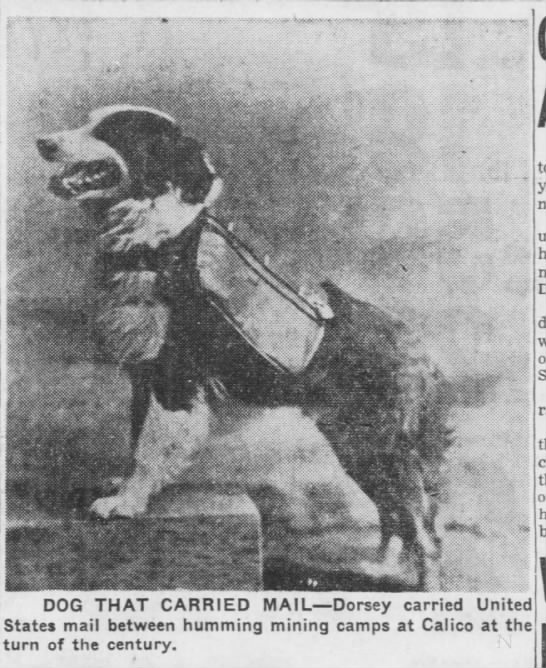
“Neither snow nor rain nor heat nor gloom of night stays this collie dog from the swift completion of…”

No, no, don’t interrupt me. I’m reciting that motto correctly. The following item from the “Morning Astorian” for November 19, 1885, explains why:
Dorsey is the suggestive name of a California mail carrier. He is a dog. His official wages are small and through the proper authorities he has made application to have them raised. At present he gets two beefsteaks a week. He wants his salary raised to seven steaks a week and mileage. His constituents have signed a petition to that effect, and the dog looks anxiously forward to the day when Postmaster-General Vilas shall grant his petition.

Before Dorsey was appointed regular mail carrier between Calico and Bismark, in San Bernardino county, his reputation was not the best. He is a black and white collie with sharp nose, bright, quick eyes and the usual shaggy coat. The way he came to be installed as a government employee was this: The postmaster at Calico had a brother in the mines at Bismark, to whom he wanted to send word one day. The place was three miles up the mountain, along a bare, stony road, burning with heat. It was a hot, toilsome tramp, and no one in the village offered to go. So the postmaster thought he would send Dorsey just to see how it would work. The letter was written and tied around the dog's neck, his head pointed up the Bismarck road, and he was told to "git out fur Bismark." He started, ran a few rods and stopped. But a shower of stones started him again, and that was the last seen of him in Calico that day.

The next day he returned from Bismark with an answering letter tied around his neck. He had been well treated at the mining camp, was fed well and petted on his return, and seemed very proud of his achievement. After this other letters were sent in the same way, and by-and-by the miners asked that all their mail be sent up by the dog route. There were more than he could carry, so a little mail bag with brass trimmings and the usual government lock was purchased and fitted to Dorsey's back. Now residents of San Bernardino county have grown to look upon the dog as a regular institution quite in the ordinary run of affairs.
"San Bernardino County Sun," May 31, 1957, via Newspapers.com


Dorsey knows when the stage that brings the mail is due, and on those occasions he sticks closely to the post-office. When the letters and papers have been sorted out, the postmaster says: "Dorsey, the mails are ready," and the dog stands soberly to have the bag strapped on. Then, with a sharp bark of farewell, he trots over the hills on a little trail he has worn himself. If he meets a stranger he makes a wide detour to avoid him, and when other dogs try to be friendly and get up a little fight with soft gloves. so to speak, he gravely declines and goes on his way. He will not run any risk of losing the mail. Arriving at Bismark he stops at six or seven of the principal houses in town and standing at the front door, barks until someone comes out. Only a few known friends are permitted by him to open the bag. Then at night the miners give him a big supper, and the next day he starts back for his office at Calico with letters bound for the post office.

Post Office Inspector T. F. Tracy, sent out by the government to inspect California mail facilities, reports the Dorsey dog route the most faithful and prompt in the state.
The “Dorsey dog route” continued until 1886, when the Bismark mine closed, and the collie was forced into retirement. It was said that poor Dorsey could not comprehend why his services were no longer required.

Dorsey remains a beloved figure in California history. In 1972, Kenny Rogers recorded a song about him, which is certainly an honor not granted to too many mail carriers.

Monday, June 1, 2020

The Phantom Hotel: An Extraordinary Time-Slip Story

Gustave Dore


As I have mentioned before, the “time-slip”--suddenly finding yourself in a much earlier era--is my favorite category of Fortean phenomena. Unfortunately, the ephemeral nature of these alleged experiences usually makes it virtually impossible to confirm or refute the validity of these claims. Did someone really--through a way we can’t come close to understanding--“visit” a much different time and place? Or is it that our collective legs are being pulled? That is usually up to the reader to decide. This uncertainty is particularly frustrating with the following tale, which, if true, would amount to one of the most astonishing adventures on record.

In October 1979, two couples, Len and Cynthia Gisby and Geoff and Pauline Simpson, left their homes in Dover, England for an end-of-summer road trip. They would ferry across the Channel and spend two weeks driving through the countryside of France and northern Spain.

The excursion progressed in a pleasantly uneventful fashion. On the night of October 3, the travelers were on the freeway north of Montelimar, France, looking for a place to spend the night. Before long, they came across a motel that looked promising. Unfortunately, when the foursome went inside, the staffer they encountered in the lobby--a man in an unusual plum-colored uniform--informed them that there were no vacancies. However, he said that if they took a certain road off the freeway, they would find a small hotel. He was sure that this establishment would have rooms.

The party had no trouble finding the road. They were interested to see that it was lined with old buildings, plastered with posters advertising a curiously vintage-looking circus. The road itself also seemed from another era; cobbled and narrow, clearly not built for the automobile. After a short time, they came across the only building they had seen on this road which showed signs of life. It was brightly lit, with some men standing outside. However, after inquiring inside, they learned this was not a hotel, but an inn. So on they went. They eventually found two other buildings; one a police station and the other sporting a large sign reading “Hotel.” It was, for our modern era, an unusual-looking hotel; only two stories, and with a decidedly old-fashioned look. But the place looked decent, and the two couples were too tired to be fussy. They were relieved when, as the motel employee had promised, they were able to get rooms.

As none of the four travelers spoke French, and the manager spoke no English, communication was necessarily limited, but the foursome made themselves understood enough to be shown to their lodgings. They noticed that the inside of the hotel was even more anachronistic than the outside. Everything was made of old-looking, heavy wood. The dining room tables had no tablecloths. They did not see any telephones, elevators, or anything else to remind them that this was the year 1979.

Their rooms were in keeping with the rest of the hotel. Large heavy beds with bolsters instead of pillows. The doors had only wooden catches for locks. There were just wooden shutters over the windows, not glass. The bathroom shared by the foursome had vintage plumbing. Still, the rooms seemed clean and comfortable, and the outdated feel of the place gave it a quaint charm.

It was certainly a novel experience.

After unpacking, they went to the dining room, where they were served a simple but satisfying meal of eggs, steak and potatoes, washed down with lager. After such a meal, the four had no problem settling down in their rooms for a long, untroubled sleep.

The next morning, the travelers returned to the dining room, where they had a breakfast of bread, jam, and thick, strong coffee that they found virtually undrinkable. As they ate, they noticed that the other guests looked as oddly retro as the hotel itself. Opposite them was a woman wearing a silk evening gown and carrying a small dog under her arm. Two gendarmes came in wearing curious uniforms unlike any other they had seen in France.

The travelers, enchanted by the strangeness of it all, decided they needed a memento of their visit. Geoff photographed Pauline standing by the windows, while Len took a picture of Cynthia inside the hotel. He took an additional photo of the hotel itself.

After their picture-taking, Len and Geoff tried to ask the two gendarmes how to take the freeway to the Spanish border, but the policemen--clearly puzzled by the Englishmen’s terminology--just gave classic Gallic shrugs. Finally, the Frenchmen comprehended that the visitors wished to go to Spain, and told them to use the old Avignon road. Len and Geoff knew enough of the local area to think this was an unnecessarily roundabout way of getting to their destination. They decided to retrace the way they had come to the hotel in order to return to the Montelimar freeway.

When the two couples were ready to leave, Len went to the manager to pay their bill. He was flabbergasted to see that he was being charged only 19 francs (about $3 in 1979 dollars.) Certain that the manager did not understand, Len endeavored to communicate to him that he was asking for the bill for all four of them. Four people who had eaten meals there. In response, the manager just continued to nod. Len showed the bill to the two gendarmes, seeking confirmation. They just smiled. Yes, yes, that was the correct amount.

The cobbled little road was just as deserted of other traffic as it had been the previous night. They had no trouble finding their freeway, and went on to spend a very pleasant two weeks roaming around Spain.

On their way back across France, our tourists decided to make another stop at the same hotel. You certainly couldn’t beat the prices. They found the turnoff, and drove down the cobbled road with the buildings promoting the same circus. It was definitely the right road.

Except...the hotel was gone. Puzzled, the travelers went to the motel by the freeway to ask for directions. The employee they questioned had never heard of any such hotel. And they had never had anyone working there who wore a plum-colored uniform.

This was all getting way too weird. The two couples drove along the cobbled road several times, desperately trying to find the hotel. But it was as if it had evaporated, leaving no trace behind. One of the four suggested that it had been demolished. Certainly, at the rates they charged, the establishment couldn’t stay in business for long. But Geoff pointed out that it was impossible for the building to vanish completely in a mere two weeks.

The shaken and confused couples finally gave up, and found lodging at a hotel in Lyon. Which cost them a very modern 247 francs.

The four travelers were puzzled by what had happened, but they assumed there was a rational explanation. At least, that was what they assumed until the photographs they had taken on their vacation were developed. The three snapshots of the hotel were in the middle of the rolls of film used by Geoff and Len. But none of those images came back from the developers, even though each roll of film had its proper amount of photographs. The negatives of those hotel shots had not been defective. They had just disappeared as thoroughly as the hotel itself.

Now more confused than ever, the Gisbys and the Simpsons resolved to tell no one of their adventure outside of family and close friends. A friend of Len’s who was an amateur fashion historian, pointed out to him that the odd uniforms the gendarmes had worn matched the description of those used by the French police--in the very early 1900s. Another confidante suggested that they had experienced a “time-slip,” and, without knowing it, spent the night at a hotel that had not existed for decades. While the Gisbys thought there might be something to that theory, the Simpsons opted to just put the whole strange affair behind them.

Geoff and Pauline did not get their wish. Word of their story reached a reporter at their local newspaper. In 1982, she published a story about their alleged brush with The Weird, and before the two couples knew it, they were famous. From that day to this, paranormal researchers have scrutinized the case--it is now among the most well-known “time-slip” stories--but it is, of course, impossible to come to any definitive conclusions. In 1985, Geoff Simpson told paranormal investigator Jenny Randles (who subsequently wrote an article about the mystery for “Fate” magazine,) “You tell us what the answer is. We only know what happened.”

So. Either the Simpsons and the Gisbys had the vacation that could truly be called “out of this world,” or these two middle-aged, seemingly sane couples pulled off an epic hoax. It’s impossible to say for sure which was the case.

Either way, it’s a heck of a good story.

Friday, May 29, 2020

Weekend Link Dump

"The Witches' Cove," Follower of Jan Mandjin


As always, this week's Link Dump brings you the latest news!

Or is is "mews?"


The Hitler version of Nigerian e-mails.

A bookbinding James Bond.

Some archaeologists claim they've found the room where the Last Supper was held.

The unusual tomb of Napoleon III's dentist.

This headline makes an excellent description for 2020 in general.

When life hands you Spanish flu, make lemonade.

The diary of a 20th century British socialite.

New York City's first ambulances.

"Taking the waters" in 19th century America.

The restoration of Charles II.

America's first juvenile delinquents.

Photographs of London from a century ago.

Some 18th century Weird Wills.

Alexander the Great's underrated father.

A really cold murder case.

A look at the opening of the Golden Gate Bridge.

A look at unicorn lore.

A look at automatic writing.

The long history of an amazing jade pagoda.

The life of a famed artistic muse.

Those problematic plague doctors.

The sad life of a Victorian actress.

When you get just a bit too proud of your hearse.

A couple in Norway just learned they were living on top of a Viking grave.

If you want to read about a High Priestess of Blood, have I got the link for you.

Musical rhythm and animals.

A 1700-year-old board game.

Murder in Blackman Mine.

Disappearance at the Devil's Punchbowl.

A 19th century woman's choice between family and ministry.

Kirby's Eccentric Museum was...well-named.

Why some people think Mars has squirrels.

The teleporting boy of Manila.

One of the world's most celebrity-packed cemeteries.

Ancient child laborers.

The story behind a famous murder ballad.

Britain's National Day of Prayer.

Hitler vs. the witches.

How WWII popularized gardening.

The supernova at the bottom of the sea.

New information about the Nazca lines.

Well, here's a shocking revelation.

The lives of two 19th century doctor's wives.

Police brutality in the 19th century.

Captain Kidd, the unluckiest of entrepreneurs.

A pregnancy leads to a woman's murder.  Anyone familiar with true crime knows there are a lot of those cases out there.

Quarantine during the Spanish flu.

How Victorian ladies exercised.

Pub culture and the Black Death.

That's it for this week! See you on Monday, when we'll visit a hotel that was, as Poe would say, "out of space, out of time." In the meantime, here's a dab of Beethoven.

Wednesday, May 27, 2020

Newspaper Clipping of the Day

Via Newspapers.com


If, for some strange reason, you follow me on Twitter or Facebook, you’ll know that I periodically post old news items about that liveliest of creatures, the goat. This one probably tops them all. From the “York Dispatch,” June 18, 1932:
WERNIGERODE, Saxony, Germany, June 18.--A scrawny billy-goat smeared with blood and honey and the scrapings of church bells, but still a billy-goat, bore mute evidence here, today that modern psychic research had won round one against the witches on "the Brocken," Germany's magic mountain.

At an eerie ceremony, in the cold and clammy fogs on top of the mountain, last night, the billy-goat failed to change into a man, although modern British and German psychic researchers faithfully carried out the old witches formula, supposed to achieve that result.

Round two takes place tonight, however, in the same setting, made famous in Goethe’s "Faust.” and in German witchcraft lore. What happened last night was this:

The experimenters, headed by Harry Price, London psychic expert, trooped up the sides of "the Brocken" leading the billy-goat and carrying an ancient witches formula, in manuscript, brought from the archives of the National Laboratory of Psychical Research, London.

With them was Miss Gloria Gordon of England, for the formula called for a maiden "pure of heart,” and Miss Gordon said she guessed she was "as well qualified as any girl nowadays" for the part.

Atop the mountain, they anointed the goat with the blood, the honey and the scrapings of church bells. They used the proper pine to light a fire, described a circle of the proper size and uttered every one of the Latin incantations stipulated.

The goat then was led into the circle by a silver cord. A white sheet was thrown over him. More prescribed abracadabra was intoned. Then, in a weird monotone, expert Price boomed "one!” He continued booming until he reached "ten!” with proper pauses.

While a hundred or so spectators, huddled in overcoats, looked on in breathless silence, Miss Gordon, the maiden pure in heart, jerked off the white sheet.

But no handsome young man stepped out to greet her. Instead, there stood the same be-smeared billy-goat, shivering in the cold.

The witches had failed, and everybody applauded, for that is what they set out to prove. As Dr. Erich Bohn, a German scholar interested in the experiment, said:

"It is far from our expectation to summon witches and spirits. Nevertheless there is no reason why these ancient recipes and rituals should be merely cast aside, for it is the business of science to reject nothing so long as the method it employs is a scientific one."

The scientists will beard the spirits on the spot again tonight. But all the debunking in the world won't change "The Brocken” for its neighbors. When ominous blue-black clouds pour over the top and the wind swoops down the valleys in a frenzy, uprooting mammoth firs and screeching around the eaves, it’s creepy story time in the little timbered houses of the mountain dwellers and probably always will be.

The billy-goat was all right this morning but Gloria Gordon, the "maiden pure of heart,” was confined to her bed with a severe cold, contracted in the raw night wind on the magic mountain.

Gloria, a pretty blonde with wavy bobbed hair, broke down and confessed that she was really Urta Bohn, daughter of a Breslau attorney. "Dad wanted to avoid publicity,” she said.

Several of the spectators at last night's experiment were rubbing sore eyes today from the fumes of the powder flares, which, they said were more diabolical than any medieval witches incense.
Goats, I have noted, possess an uncanny ability to get people to make utter fools of themselves.

Monday, May 25, 2020

A Moment of Madness: Murder at the Villa Madeira

Neenah "News Record," April 23, 1935, via Newspapers.com


“Giving it all up for love” is probably the most shopworn of melodramatic clichés. However, like all clichés, such things are to be found in real life, as well. One notable example is found in the life of one man who went from prosperous upper-class respectability to sad, squalid death, all thanks to his infatuation with an alluring woman.

Francis Rattenbury was born in England in 1867. When he was 18, he apprenticed at an architectural firm. By 1892, he decided that Canada had greater opportunities for a talented and ambitious young man, so he relocated to Vancouver, where he was an almost immediate success. When Victoria was planning a new provincial legislature, a contest was held to pick an architect. Rattenbury’s bold, striking style won, ensuring that he would become one of Canada’s most influential building designers.

Rattenbury could be said to have practically built the city of Victoria. He was a brilliant architect whose work, such as the Parliament Buildings, the Empress Hotel, and his own home (now Glenlyon Norfolk School) still adorn the area. He was also prominent as a town planner, businessman, politician and philanthropist. He was not popular personally--he had a reputation for being ruthless, tight-fisted, and not overly scrupulous--but no one questioned his ability or his successes.
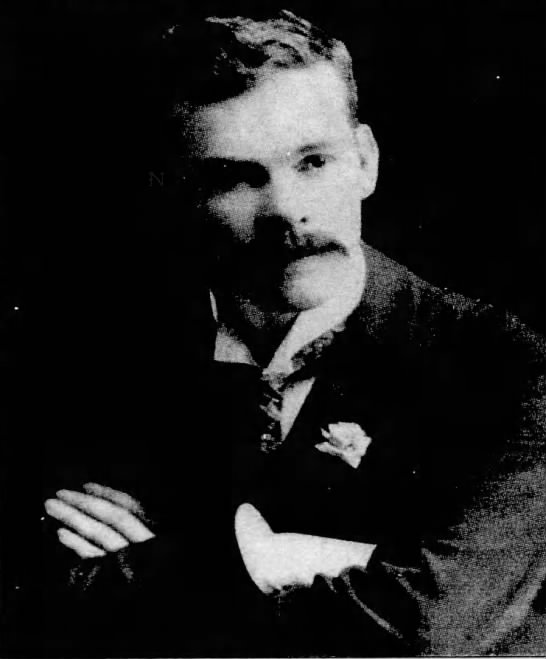
Rattenbury at the height of his fame.  The "Victoria Times Colonist," June 18, 2000


In 1898, the now renowned architect married a young woman named Florence Nunn. Everyone who knew Rattenbury thought it was an odd match. Francis was a handsome, dynamic sort who thrived on mingling in society and getting ahead. Florence was just the opposite. Of humble background, she was quiet, dowdy, and retiring. She rarely left their grand house, and had no taste for the elegant entertainments her husband enjoyed.
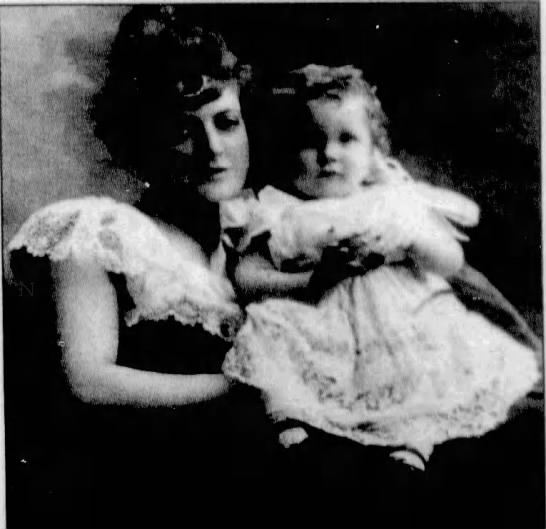
Florence and their daughter Mary. The "Victoria Times Colonist," June 18, 2000


Inevitably, the two began leading separate lives. Although they continued to live under the same roof, by the time WWI dawned, relations between the Rattenburys were so bad they rarely even spoke.

During this period, Rattenbury’s professional life was little better than his personal one. His style of architecture had gone out of fashion, and several disastrous investments left him nearly broke. Like so many people who fail to find happiness either at home or at work, he sought consolation in a bottle. He soon became constantly depressed, and nearly constantly drunk.

However, in 1923, it looked like his depleted fortunes would be revived. Victoria’s city leaders hired him to design a new amusement palace, which eventually was named the Crystal Gardens. To celebrate, a dinner was held in his honor at the Empress Hotel. After this event, he met another guest at the hotel, a pianist named Alma Pakenham, who was in Victoria as part of a concert tour. And with this meeting, Rattenbury’s life began to take its final, irreversible decline.

28-year-old Alma was a gifted musician, beautiful, vivacious, and seductive. In short, she was everything Rattenbury’s wife was not. Alma and Francis were immediately strongly attracted to each other, and were soon embarked on a very public affair.

Alma at about the time she met Francis


For some time now, Francis had disliked his wife. Now that he decided he wanted to marry another woman, he hated her. When Florence refused to give him a divorce, he treated her with a cold brutality that shocked and scandalized Victoria. When Florence declined to move out of their house, he responded by shutting off the utilities and moving out all the furniture. When even that did not make her budge, he essentially moved Alma into the residence, forcing his wife to live upstairs. Finally, the increasingly harassed Florence agreed to legally end their marriage.

For Francis, this was the classic Pyrrhic victory. His children (who loathed Alma) rejected him. Victoria society, disgusted by his cruelty towards a wife who had been guilty of nothing more than being dull, ostracized him. By 1929, the Rattenburys realized that regaining their former standing in Victoria was impossible, and they resolved to start anew in England. By the beginning of 1930, the pair had settled in Bournemouth, in a home named Villa Madeira. With them were their young son John, and Christopher, Alma’s child from a previous marriage.
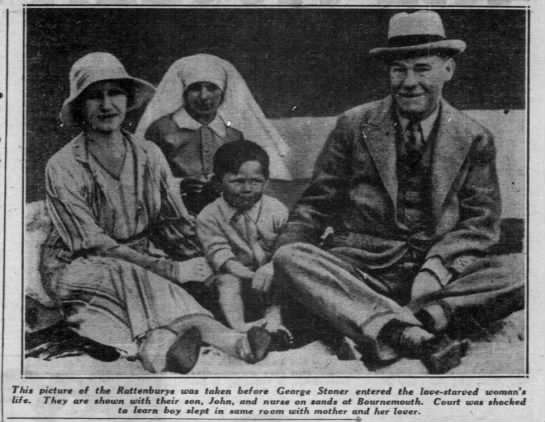
"New York Daily News," July 14, 1935


The move failed to solve their problems. Although she found some success as a songwriter, Alma, who was used to a glamorous, busy life, was out-of-place in a sleepy resort town. She was a heavy cocaine user, which led her to experience wild mood swings--from hyperactive to deep torpor. Francis was even unhappier. No one knew or cared that back in Canada, he had been Somebody. Bored and unfulfilled, he again retreated into drunkenness and deep depression. Looking at this pitiful figure, no one would ever have guessed that he was once a powerful and successful man.

Francis’ decay had an even more alarming aspect for Alma personally: he became impotent. Unsurprisingly, Alma--still reasonably young, attractive, and now sexually frustrated--took a lover. That alone would not have necessarily led to disaster. It was her choice of paramours that turned this merely drab story into Greek tragedy.

18-year-old George Percy Stoner worked for the Rattenburys as a chauffeur and general odd-job man. He was good-looking, shy, and, even for his young age, markedly naive and inexperienced. It is no wonder that when the much-older, sophisticated Alma seduced him, he quickly became completely under her spell. He was obsessed with her.
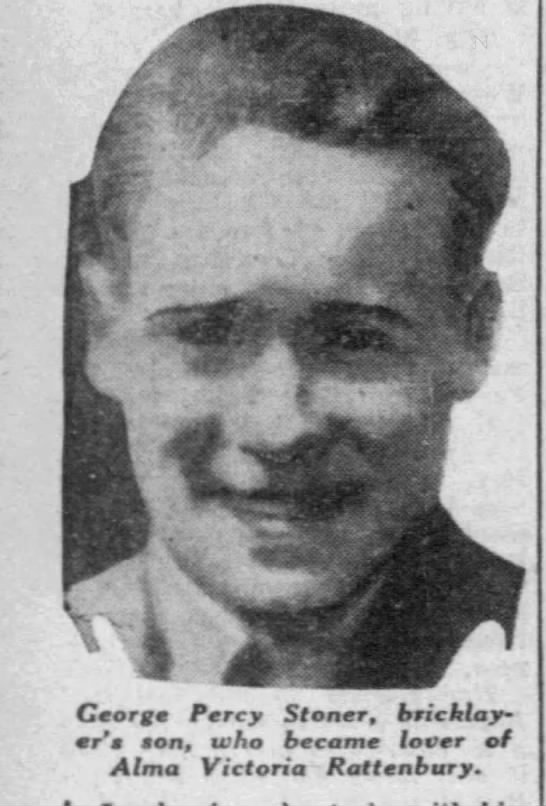
"New York Daily News," July 14, 1935


Unfortunately, this obsession took a dark turn. Stoner became violently jealous of Alma’s husband. (Although it is unclear whether or not Francis was aware of his wife’s affair with their handyman, it seems probable that he was, and simply passively accepted the situation.) Although Alma assured her lover that she and Francis no longer slept together, he didn’t believe her. When Stoner learned that Alma and Francis were planning to go on an overnight trip, he interpreted that as the two renewing their physical relationship. He seethed over it, and nothing Alma could say eased his mind.

On the night of March 28, 1935, something dreadful happened in the Rattenbury home. Exactly who did what is fated to remain a mystery. All we know for certain is that at 10:30 p.m., Alma’s maid, Irene Riggs, phoned for doctors to come to the house immediately. The physicians found Francis sprawled on his chair, covered in blood. The stricken man, unconscious but still alive, was rushed to a hospital. And since the doctors immediately saw that he was injured as the result of a brutal attack, (later shown to have been by someone wielding a carpenter’s mallet,) the police were called in.

When officers arrived on the scene, the first thing they saw was Alma, very hysterical and very drunk. It was impossible to get a coherent story out of her, but under prolonged questioning, she finally blurted out that she had assaulted her husband. The next morning, a somewhat calmer Alma again asserted her guilt to the police. She said she and Francis had been playing cards when he told her he wanted to die, and begged her to kill him. She picked up the mallet, and, when she hesitated, her husband taunted her that she didn’t “have the guts to do it.” With that, she obliged Francis by bashing him over the head. However, Stoner told Irene Riggs that he was actually the guilty party. He couldn’t bear seeing Alma with another man, even if that man was her husband.

After Francis died of his injuries, his wife was arrested for murder. “That’s right,” Alma responded. “I did it deliberately and I’d do it again.” After Riggs told police what she knew, Stoner was charged as well. When he was arrested, Stoner repeated essentially the same story he told to Irene Riggs: after seeing Alma kiss her husband goodnight, he became so enraged that he crept in through the unlocked windows and hit Rattenbury--who was then dozing in his chair--with a mallet. Alma, he emphasized, was completely innocent.

Their trial was one of the most highly-publicized in Old Bailey history. Every day, the courtroom was crowded with journalists and the public, eager to hear every scandalous word. Alma, despite her original confession, pleaded “not guilty.” (She was persuaded to change her plea when it was pointed out to her that she would not want her sons to live with the taint of having their mother hanged for murder.) She made a good impression on the stand, giving her testimony with dignity and seeming credibility. Now her story was that when she went to her bedroom on the fatal night, Stoner came in. He seemed “a little queer.” When she asked, “What is the matter, darling?” He replied that he was in trouble, but could not tell her what it was. “Then he said I was not going to Bridport next day because he had hurt ‘Rats.’ It did not penetrate my head what he had said until I heard ‘Rats’ groan. Then my brain became alive. I jumped out of bed. I ran downstairs.”

Stoner--who also pleaded “not guilty”--did not take the stand. In his defense, it was suggested that the young man--who had, under Alma’s influence, also become a regular cocaine user--was simply not in his right mind at the time of the murder. His counsel argued that Stoner was guilty of nothing more than manslaughter--that although he had been in “an insane fit of jealousy,” he had not really intended to kill Francis.

It was obvious that if Alma did not beat Francis to death, her lover must have. It was up to the jury to decide which one was responsible. In the end, they chose to acquit Alma. Of murder, at least. The lurid details of the unconventional Rattenbury household had been laid bare for all the world to see. Even Alma’s own defense attorney condemned her morals, stating, “She will bear the brand of reprobation to her grave.”  As Alma left the courtroom, the crowd outside booed her.

Stoner was found guilty, and sentenced to hang. When the judge asked him if he had anything to say, the young man said calmly, “Nothing at all, sir.” Stoner later told his father that as long as Alma was free, he cared little about his own fate.

Alma was shattered by the verdict. She was so distraught that it was felt necessary to place her in a nursing home. She constantly bewailed Stoner’s imminent end, and talked frequently of killing herself. Then, one night, she was visited by a woman whose identity remains unknown. What the two spoke about is equally mysterious. All we know is that this meeting probably led to what happened next.

The following morning, Alma borrowed money from a nurse. She used it to buy a knife. Later that day, she was seen on the bank of the River Avon. She was swinging her arms wildly, after which she fell into the river. When her body was recovered, it was found that she had not drowned. She had stabbed herself six times in the chest. She left behind a note saying, “If I thought it would help Stoner, I would stay on, but it has been pointed out all too vividly to me that I cannot help him. That is my death sentence.” She asked God to look after her children, adding, “Thank God for peace at last!”

When Stoner heard of Alma’s death, he broke down and sobbed. Then, he wrote to his attorney saying that he was now free to tell the truth about Francis’ murder.

Alma’s gruesome suicide created a change in public opinion. Alive, she was seen as the embodiment of wicked sexual passion, a heartless seductress who had led a poor boy astray. By killing herself in such a dramatic fashion, she became a tragic, even noble figure.  There had always been much sympathy for Stoner, which now intensified. A campaign was launched to commute his death sentence, which ultimately proved successful. The Home Secretary announced that Stoner’s sentence would now be life imprisonment.

Stoner wound up serving only seven years. He fought bravely in World War II, (he took part in the D-Day invasion,) and subsequently married. He lived a quiet life until his death from Alzheimer’s in 2000. Eerily, he died on the 65th anniversary of Francis Rattenbury’s murder.
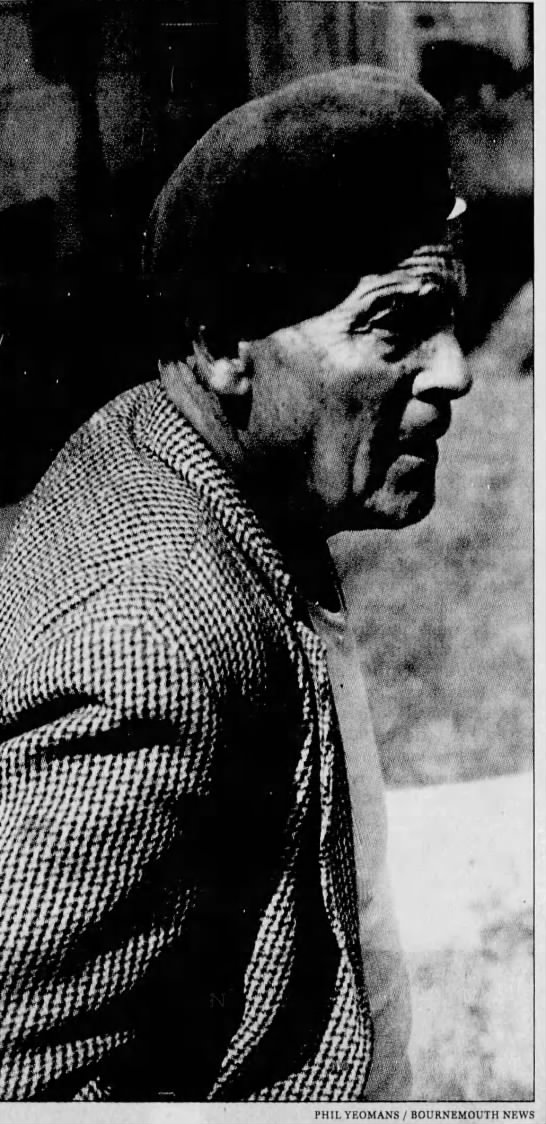
Stoner in later life.  The "National Post," November 30, 2002


George Stoner never spoke publicly about the murder. But in 2002, his wife of fifty years, Christine Stoner, gave an interview to Canada’s “National Post.” She described George as “a good father and husband. Nothing fazed him. He went the same gentle pace all the time.”

When asked if she thought her husband was guilty, she said quietly, “I think he was overcome by a moment of madness.” Christine added bitterly, “And this woman [Alma] really made a fuss of him and he pandered to her every demand.” When asked about the theory that George had taken the blame for Alma’s crime, Mrs. Stoner replied, “I’ve always thought that may be true, though I never broached the subject with my husband.”

Christine felt that her husband was forever haunted by what had happened. “Sometimes, he’d go very quiet and you’d see tears rolling down his cheeks. You just wanted to leave him alone and let him get over it. I didn’t like to keep on about it.”

At the time of the murder, many thought Stoner was indeed “covering up” for Alma. On the other hand, Alma’s former sister-in-law, a Mrs. Kingham, named Stoner as the murderer. According to her, Stoner overheard Rattenbury urging his wife to have an affair with a Bridport man named Jenks, in the hope that this would persuade Jenks to invest in one of Francis’ business projects. Stoner was so infuriated that Francis would urge Alma to essentially prostitute herself that he was driven into violence. The question of which of these star-crossed lovers actually did the brutal deed is fated to remain uncertain.

If there is anything positive to say about this grim tale, it is that Alma’s two sons managed to overcome their family tragedy and go on to lead happy and productive lives. John followed in his father’s footsteps and became a successful architect. In 1998, John Rattenbury was invited to Victoria to participate in the celebration of the 100th anniversary of the legislative building designed by his father. He was able to see Francis as not reviled, but honored. John later called it a “closing of a circle, and the highlight of my life.”

Time does indeed heal all things. Even the reputation of the once-disgraced Francis Rattenbury.
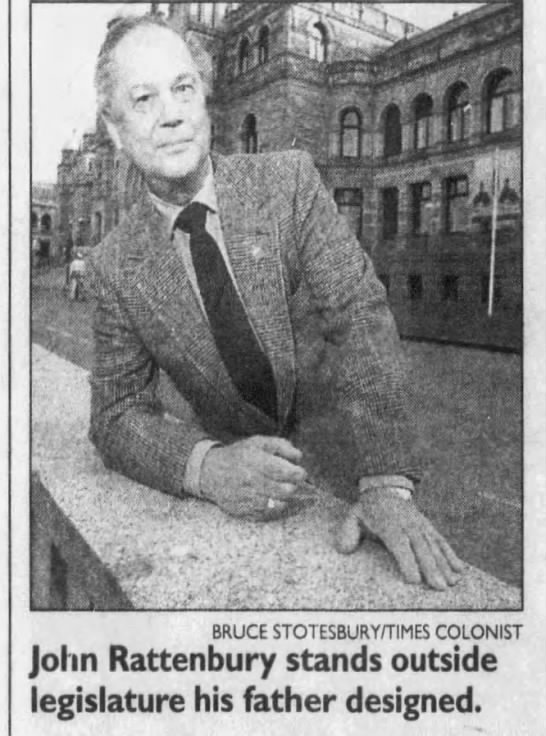
Victoria "Times-Colonist," February 11, 1998

Friday, May 22, 2020

Weekend Link Dump

"The Witches' Cove," Follower of Jan Mandijn


This week's Link Dump features a pool party!


Who the hell owns English swans?

Why the hell do we see lights before we die?

Ancient coffins and black goo.

George Cruikshank and the Tower of London.

Archival sacrifices for love.

Trieste, city of exiles.

The strange case of Lurancy Vennum.

The birth of the English actress.

The language of Cairo goldsmiths.

Raphael, the architect.

Thomas Bewick on cats.

1918 advice about combating flu.

This would explain a lot about 2020.

Those ever-popular stone throwing poltergeists.

The bizarre--and somewhat murky--disappearance of Terrence Woods.

The first pocket record player.

The mystery of the Guadeloupe Woman.

A heroic London hygienist.

How one family came to be addicted to the name "Seringa."

The latest in the world of science: penguin poop is driving researchers crazy.

Hidden text in the Dead Sea Scrolls.

An important discovery of an ancient city.

Sweden's last public beheadings.

This week in Russian Weird: in which doll collecting meets Ed Gein.

The Devil in a diving suit.

Endangered languages.

A Paris bookshop's legendary clientele.

The real "Real McCoy."

Exorcism at an Irish grotto.

The first Englishman to visit Japan.

A family is murdered by a mob.

The disputed link between rats and the Black Death.

The female prisoners of Newgate.

A father/daughter relationship goes really bad.

Lesser-known photos of the Titanic.

Fortean fogs.

King John's illegitimate son.

Strange doings involving an Oxford scholar.

The life story of a 19th century refugee in London.

The legendary Firebird.

The mysteriously disappearing tanker.

Want to combine budget travel with a crime spree?  You've come to the right link.

What do you get when you mix LSD, prostitutes, the CIA, and aliens?  This story.

Why Catherine was The Great.

The sons of Dido Elizabeth Belle.

And, finally: dawn at the Moon's North Pole is a hell of a spooky sight.


And yet another Link Dump comes to a close.  See you on Monday, when we'll look at a scandalous and particularly sad murder.  In the meantime, what's a pool party without Water Music?